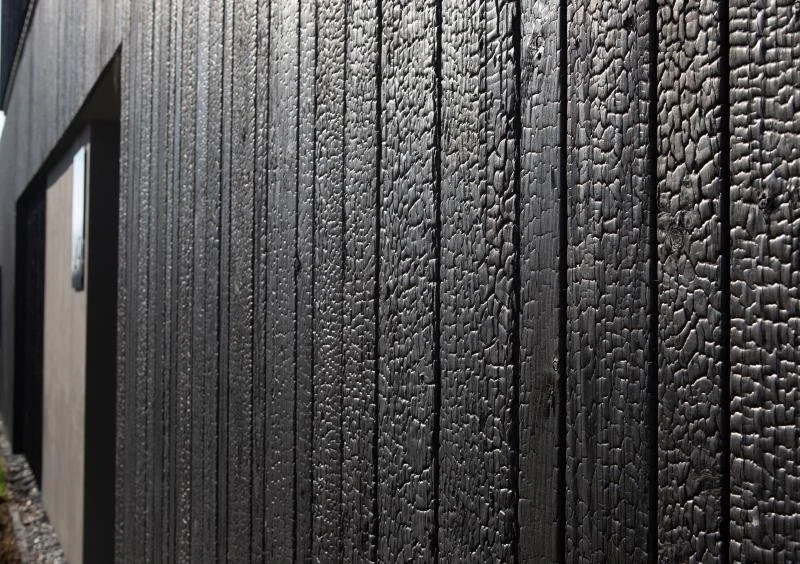

Shou Sugi Ban; An ancient Japanese technique, a little fire, and a beautiful way to transform timber.
Sometimes the simplest materials can produce the most interesting architectural results. Shou Sugi Ban is a great example. By deliberately burning the surface of timber, an ordinary board can be transformed into something with incredible texture, depth and character. Shou Sugi Ban is a centuries-old method of preserving timber through charring. Shou Sugi Ban (焼杉板) translates roughly to “burnt cedar board” or “charred cedar plank.” along with another Japanese term Yakisugi (焼杉), meaning “burnt cedar.”
Shou (焼) – burnt or charred
Sugi (杉) – Japanese cedar
Ban (板) – board or plank
Originally developed for practical reasons, the technique has become increasingly popular in contemporary architecture, particularly for exterior cladding and feature walls.
Traditionally, the technique was used to extend the life of timber cladding without the need for chemical preservatives. By exposing the surface to intense heat, the outer layers of timber undergo carbonisation, breaking down the organic compounds and leaving behind a protective layer of charcoal.
This carbonised surface helps shield the underlying timber from sunlight and weathering, while making it less hospitable to fungi and insects. It's a remarkably simple concept: deliberately burning the outside of timber to help preserve what's underneath.
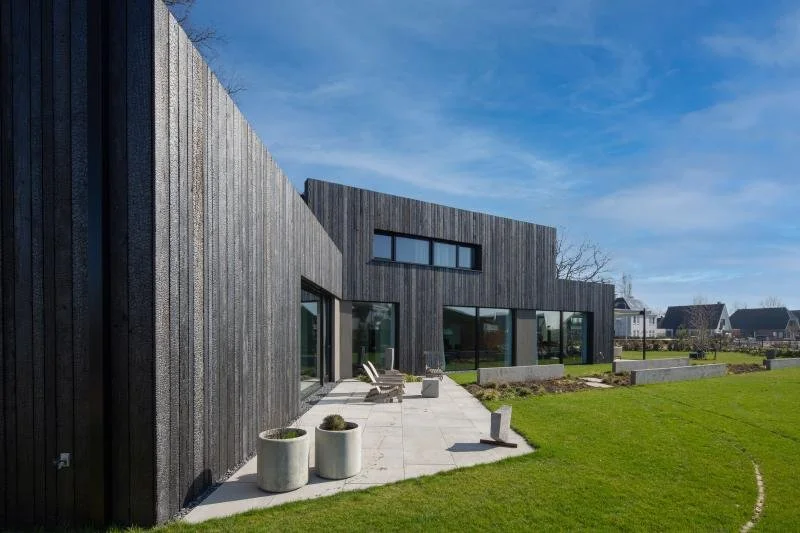
In Japan, examples of charred timber cladding have survived for 80 to 100 years, and in some cases considerably longer, often with relatively little maintenance. As with any cladding, the environment matters, so it’s safe to say the longevity will vary between Southland and Central Otago; that’s not to say it won’t last a long time in either location. Traditionally in Japan this was done with cedar, however, any untreated timber can be used.
Charred timber can work particularly well in the landscapes of Central Otago, where its dark finish contrasts beautifully with schist, dry grasses and the surrounding hills. In Southland, the same material can create a striking contrast against the greener landscape, exposure and careful detailing are always important considerations but it’s versatility can make it a great option in either location.
What we love about it is you can do it yourself
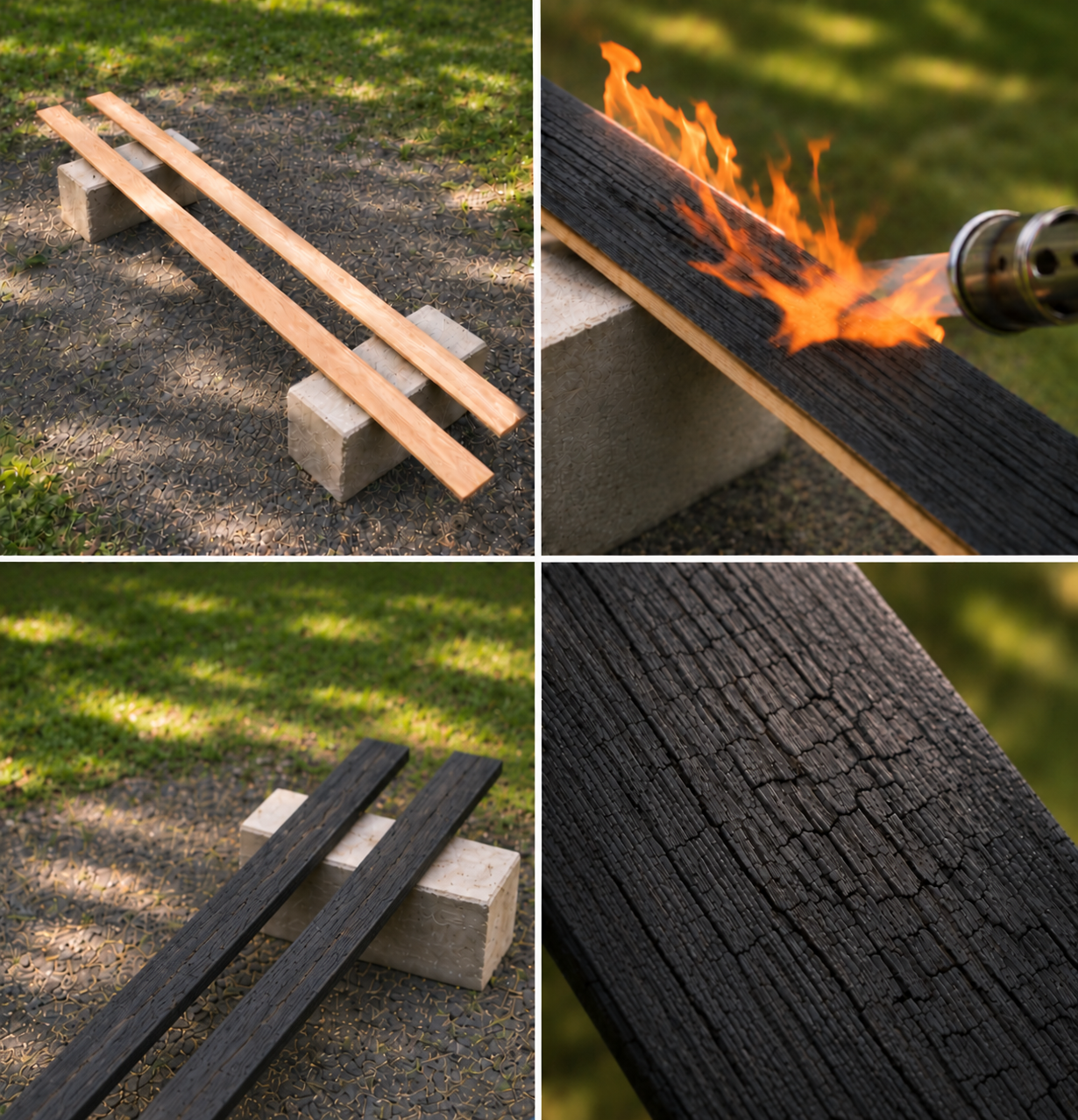
While the process can be a bit labour-intensive, the results can be pretty impressive, whether you're using cedar cladding or simply experimenting with an offcut of untreated pine. For anyone keen to give it a go, a gas blowtorch is a relatively inexpensive way to get started, although working with fire obviously requires some care.
The amount of charring makes quite a difference to the final look. A light burn brings out the natural grain and variation in the timber, while a deeper burn creates a rich black finish with a cracked, almost scale-like texture. You can also brush back the charred surface with a wire brush to reveal more of the grain, and finish it with a suitable clear exterior timber oil.
What we particularly like about Shou Sugi Ban is its simple, understated appearance. There's a consistency to the dark finish, but each board still has its own character. It's worth playing around with a few offcuts to see what you can achieve.
Tools
Roofing torch and gas cylinder
Plumbing brazing torch for detail work
Gloves
Water spray bottle / hose (to put out any lasting embers)
Wire brush for brushing back, depending on the look
Paintbrush and a clear external wood oil
Process
Start by working out how you're going to use the timber and cutting everything to size beforehand. This avoids having to cut or handle the finished boards more than necessary, which can damage the charred surface.
Set up in a safe outdoor area, away from anything combustible. A gas roofing torch works well for covering larger areas, and you can experiment with different levels of charring depending on the finish you're after. A light burn will bring out the grain, while a deeper burn creates that distinctive black, cracked surface. It can take a little longer than you might expect to get an even finish.
Once you're happy with the result, thoroughly extinguish any remaining embers and allow the timber to cool completely. A wire brush can then be used to remove some or most of the charcoal, revealing a warmer brown finish and more of the natural grain.
Finally, gently brush away any loose ash or charcoal. Depending on the look you're after and where the timber will be used, a suitable timber oil or sealer can help bring out the colour and reduce charcoal rubbing off.
A few tips
Cut your timber to size first. Work out where each piece is going and cut it to length before charring. This avoids unnecessary handling later on as the char can be quite fragile.
Keep a water spray bottle / hose handy for controlling small flare-ups. Make sure the timber is thoroughly extinguished before leaving it unattended.
A smaller plumbing torch can be useful for touching up areas that the larger flame has missed, particularly around edges and corners.
Long or thin pieces of timber can warp quite a bit during charring. Try to heat the boards evenly and allow them to cool on a flat surface. Weighing them down may help minimise movement, although it won't necessarily prevent warping.
The charcoal surface can be surprisingly fragile, particularly with a deeper char. Handle the boards carefully until they've been finished and installed, as even a small knock can damage the texture.
A little experimentation goes a long way
What makes Shou Sugi Ban particularly appealing is the way such a simple process can completely transform a material.
A piece of timber, some heat, and a little experimentation can produce something quite remarkable.
Whether you're considering charred timber for a new home, exploring materials for an alteration, or simply looking for an interesting weekend project, it's a technique worth investigating.
At Candela Architecture, we enjoy exploring materials that bring texture, character and longevity to buildings. Good architecture isn't necessarily about using expensive or complicated materials but understanding how simple materials can work together to create something special.
Thoughtful design for Southland and Central Otago.