

The small detail that can make stone cladding feel authentic, grounded, and timeless.
Stone has been used in architecture for thousands of years, yet some modern stone-clad buildings still feel strangely flat. Often the difference comes down to a subtle detail known as a jumping stone.
Whether you're designing a schist wall in Central Otago or incorporating stone into a new home in Southland, understanding this traditional technique can dramatically improve the appearance of stone cladding.
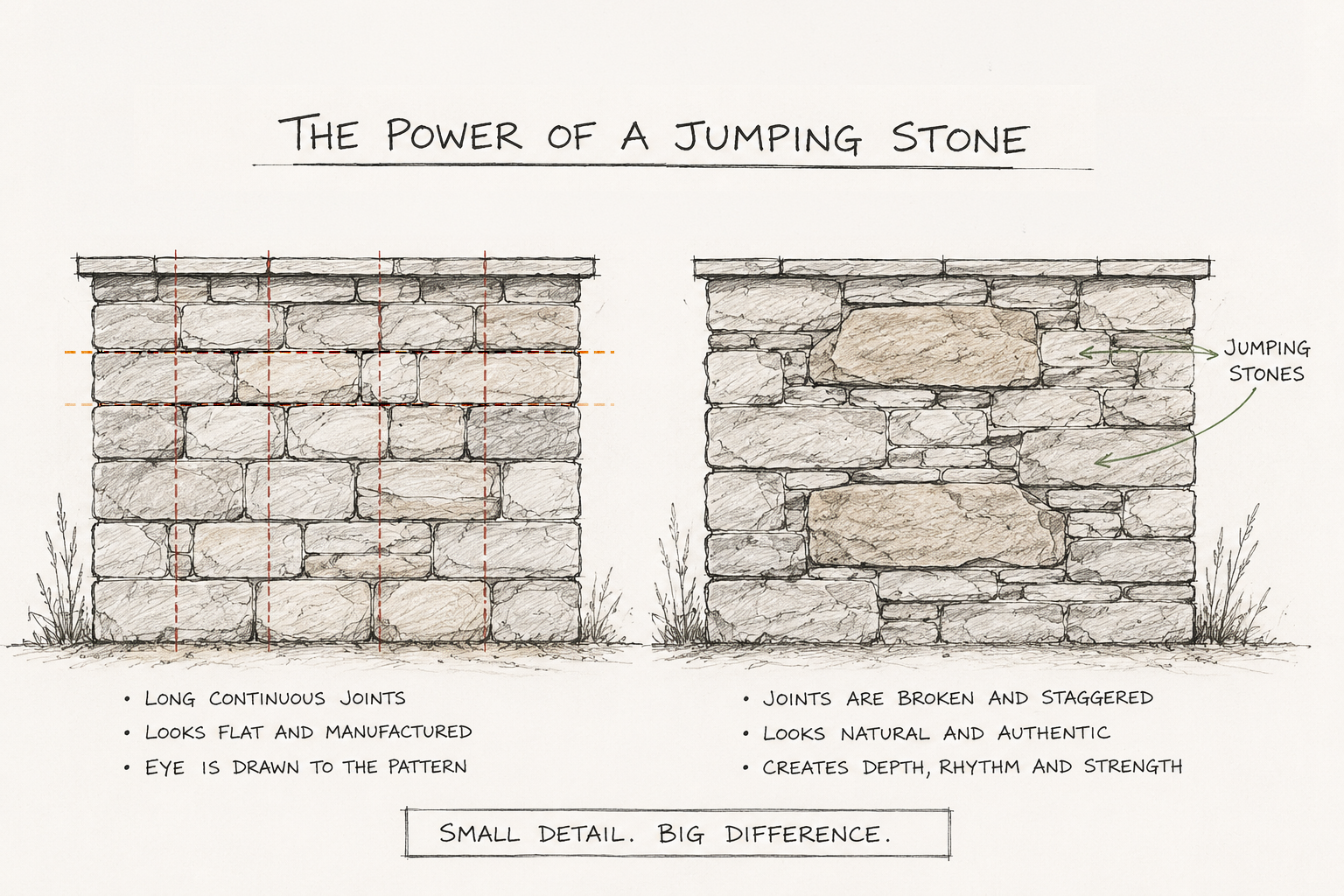
What Is a Jumping Stone?
A jumping stone is a larger stone that spans across horizontal joints within a stone wall, visually "jumping" over one or more courses of stone.
Rather than allowing joints to run continuously across the wall, jumping stones help break up patterns and create the irregular, interlocking appearance commonly seen in traditional masonry.
In simple terms, they make a wall feel like it was built from individual stones rather than assembled from repeating pieces.
Why Does It Matter?
Good stonework rarely looks repetitive. When horizontal joints align over long distances, the eye quickly picks up the pattern. The wall can begin to look manufactured rather than crafted.
Jumping stones help:
Break up long horizontal lines
Create visual strength and stability
Mimic traditional stone construction
Add depth and character
Make stone cladding appear more authentic
Even when using modern stone veneer systems, careful placement of jumping stones can dramatically improve the finished result.
The Difference Between Good and Great Stonework
Many people can't immediately identify why one stone wall looks more convincing than another. Often the answer lies in the composition.
Traditional stonemasons instinctively varied stone sizes, staggered joints, and incorporated larger stones throughout a wall. These larger stones acted as visual anchors and created rhythm across the façade. Without these elements, stonework can feel uniform and predictable. With them, the wall gains texture, movement, and a sense of permanence.
Stone in Central Otago
Central Otago's schist landscapes have shaped a unique architectural language. Historic cottages, boundary walls, farm buildings, and churches throughout the region often feature carefully composed stonework where larger stones naturally bridge across smaller courses. Modern homes can draw from these precedents without becoming overly traditional. A contemporary home may feature clean lines and large areas of glazing while still incorporating stone detailing that references the region's heritage. Jumping stones are one of those subtle details that help achieve this balance.
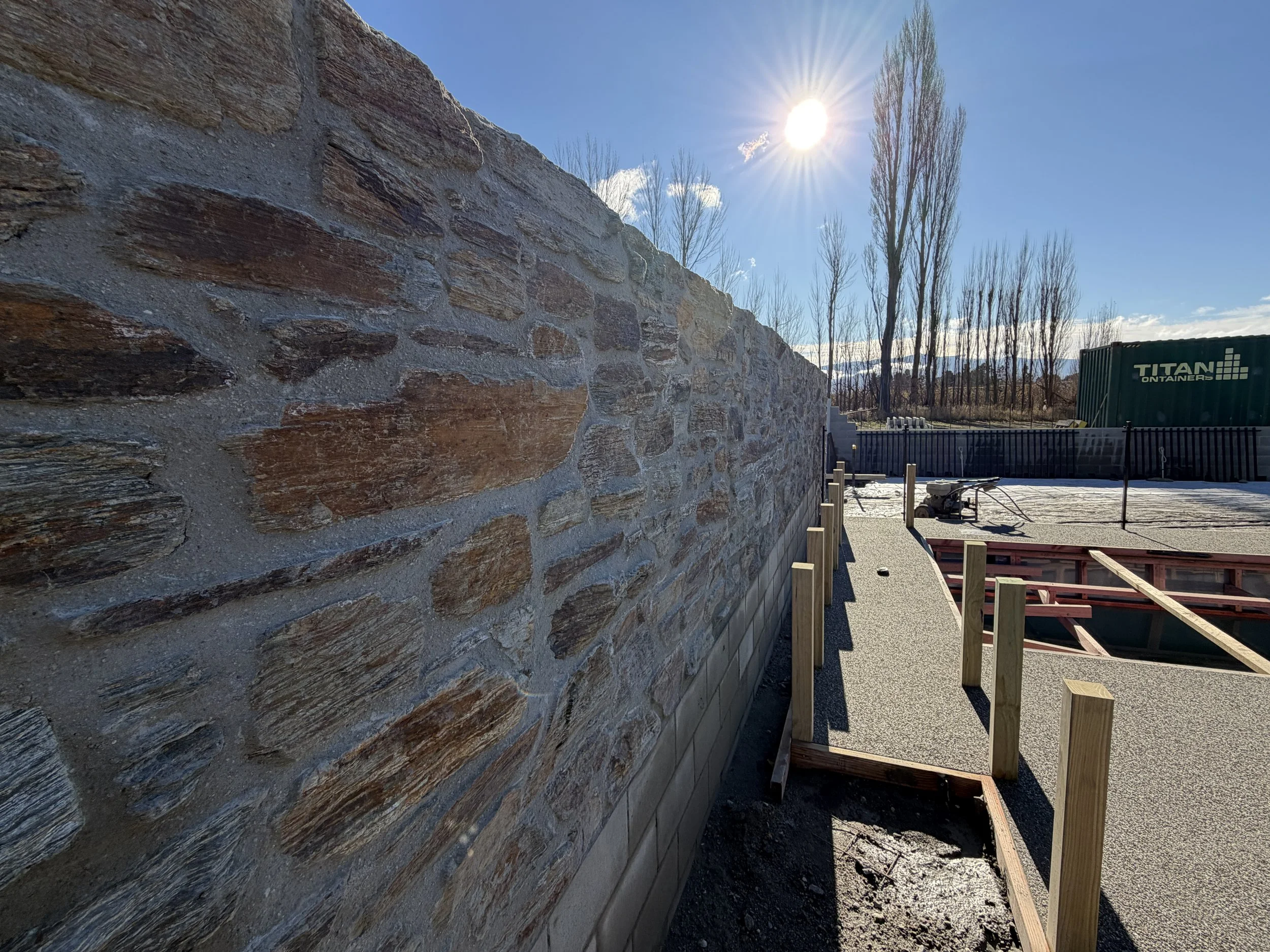
Stone landscaping walls underway at our project near Clyde. Soon to frame a private internal courtyard designed by Candela Architecture
More Than Just Aesthetic
Historically, larger stones that crossed multiple courses could also contribute to the stability of a masonry wall. Today, most stone cladding systems are fixed to modern wall structures, so the visual role is often more significant than the structural one. However, the principle remains the same. Good stonework should look as though it belongs to the landscape and has been assembled with care rather than simply applied to a surface.
When people think about stone, they often focus on colour and texture. The more important question is often how the stone is arranged. Two walls can use the exact same stone product and look completely different depending on the layout, jointing, proportion, and use of jumping stones. As with many aspects of architecture, the quality is often found in the details.
Thoughtful Materials, Designed with Intent
At Candela Architecture, we believe great design isn't just about selecting the right materials. It's about understanding how those materials are composed, detailed, and experienced. Whether it's a new home, renovation, or rural project in Southland or Central Otago, attention to small details such as stone coursing and jumping stones can make a significant difference to the final result. The best architecture often feels effortless. Behind that simplicity is a careful consideration of countless small decisions that work together to create something enduring.
Candela Architecture.
